In the domestic landscape of 2026, the “solo pet” household is becoming a rarity. From urban lofts to suburban estates, homeowners are embracing the “pack” lifestyle. However, as any veteran pet parent knows, adding a second or third four-legged family member doesn’t just double the love—it triples the logistical complexity, especially during feeding time.
Gone are the days of scattering mismatched plastic bowls across the kitchen floor. In the modern, curated home, Multi-Pet Harmony is achieved through the Ultimate Feeding Station. This isn’t just about furniture; it’s about behavioral psychology, ergonomic design, and a touch of 2026 technology.
The Psychology of the “Pack” Ritual
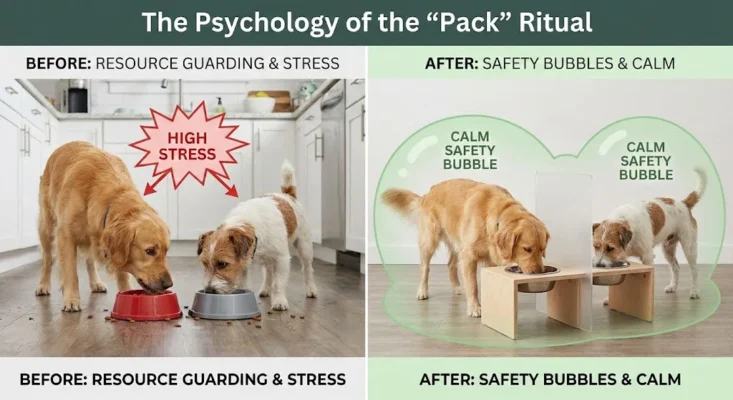
In the wild, eating is a vulnerable time. In the home, that ancestral instinct manifests as “Resource Guarding.” Even the most well-behaved dogs can feel a spike in cortisol when their pack-mates are eating just inches away.
By 2026, designers have realized that a feeding station’s primary job is to create “Safety Bubbles.” A well-designed multi-pet station uses physical distance and visual barriers to tell each dog: “This is your space. Your food is safe.” When the anxiety of “food theft” is removed, the entire energy of the home shifts from chaotic to calm.
The “One-Size-Fits-None” Challenge
The biggest mistake in multi-pet gifting or design is the “Linear Flat Stand.” If you have a Great Dane and a French Bulldog, a single flat bench is a disaster. One dog will be straining their neck down, while the other is eating at a height that’s likely too high.
The Staggered Elevation Solution
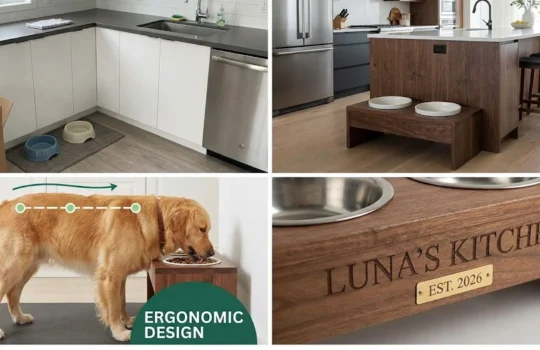
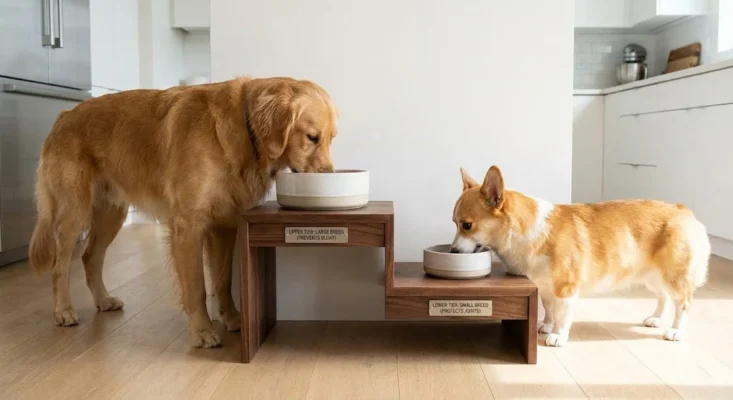
The 2026 standard for the “Pack Station” is Staggered Elevations. This involves a single, cohesive piece of furniture—usually crafted from a high-Janka-hardness wood like Black Walnut or Hard Maple—designed with tiers.
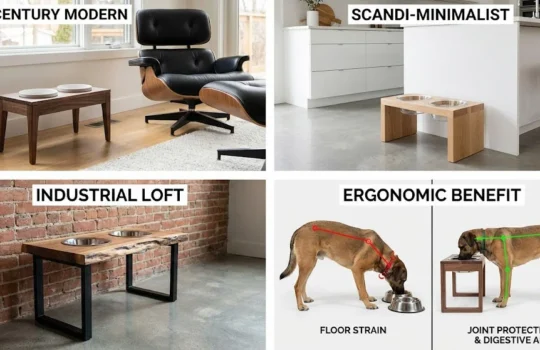
The Upper Tier: Elevated for large breeds to prevent Gastric Torsion (Bloat).
The Lower Tier: Slightly raised for smaller breeds to protect their delicate front joints.
By mounting these at the specific orthopedic height for each pet, you ensure that the “Pack” stays healthy and pain-free as they age together.
Strategic Layouts for Maximum Peace
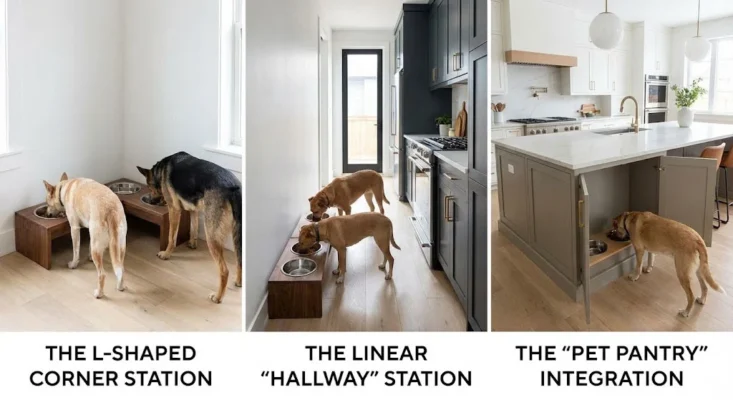
How you position the station in your home is just as important as the wood it’s made from. In 2026, we are seeing three dominant configurations:
- The L-Shaped Corner Station: This is the “Gold Standard” for dogs with high food anxiety. By placing bowls on an L-shaped stand, the dogs are positioned at a 90-degree angle from each other. They cannot make direct eye contact while eating, which significantly reduces the impulse to growl or “speed-eat.”
- The Linear “Hallway” Station: Perfect for long, narrow kitchens. This layout keeps the “Pack” in a single file line. While they are closer together, the linear flow mimics a natural pack walking formation, which many dogs find instinctively orderly.
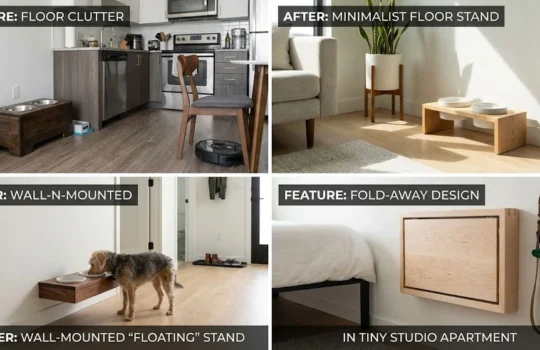
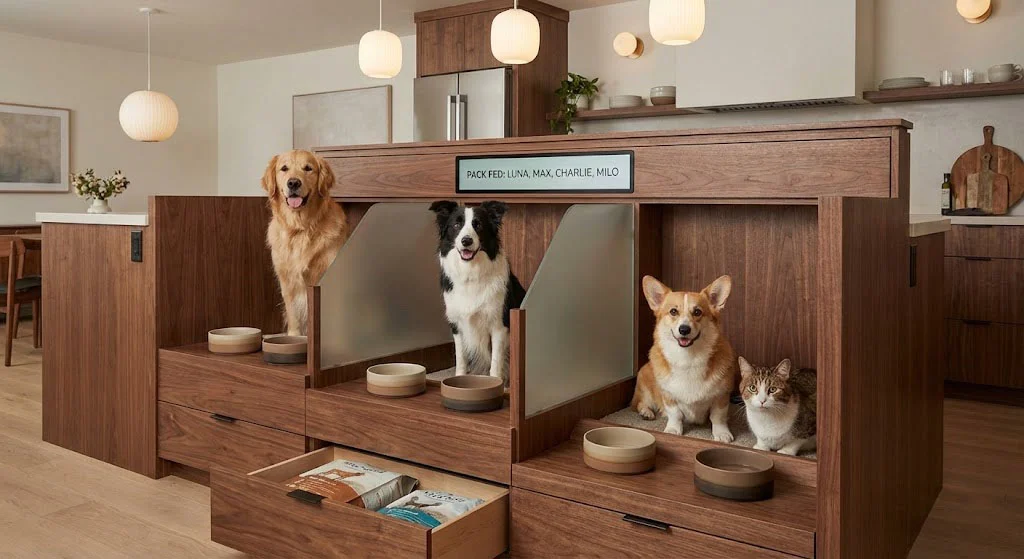
- The “Pet Pantry” Integration: High-end 2026 kitchen remodels now feature built-in pet nooks under the kitchen island. These stations are recessed into the cabinetry, providing a “den-like” feel that makes pets feel protected from the “traffic” of the kitchen.
2026 Tech: The Smart “Food Thief” Guard
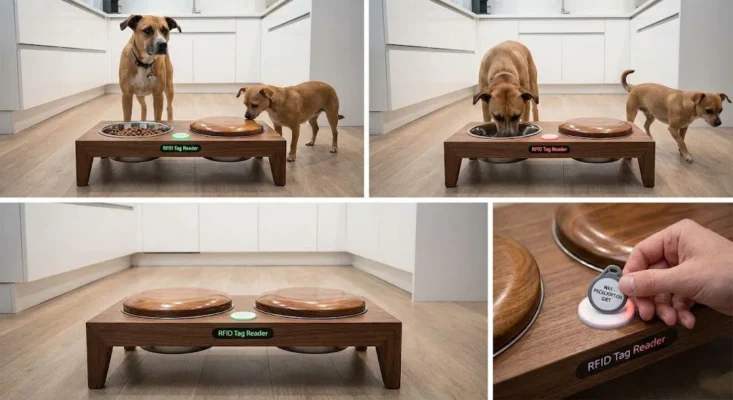
We’ve all seen it: the fast eater finishes their bowl and immediately bullies the slow eater away from theirs. In 2026, high-end wooden stations are now being built with Integrated RFID Sensors.
How it works: Each pet wears a small, lightweight tag on their collar.
The Benefit: The bowl cover (often a sleek, matching wood or matte acrylic) only retracts when the correct pet approaches.
The Result: You can finally feed a specialized prescription diet to one dog without worrying that the other will “vacuum it up” the second you turn your back.
Material Science: Durability for the Pack
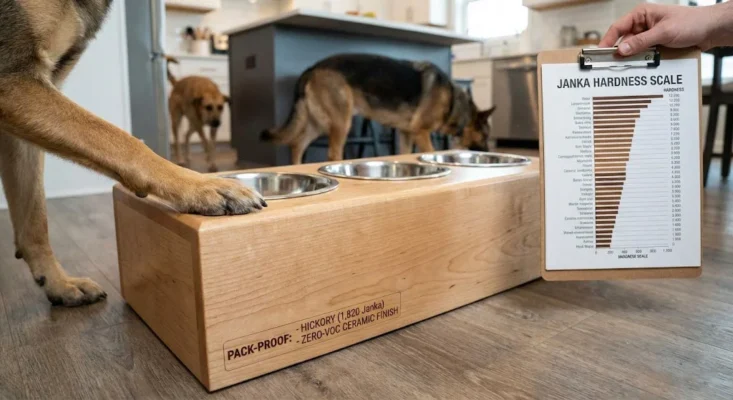
When you have three dogs rushing to the kitchen at the sound of the kibble bin, your furniture needs to be “Pack-Proof.”
Janka Hardness Matters: We recommend Hard Maple (1,450 lbf) or Hickory (1,820 lbf) for households with large, enthusiastic breeds. These woods resist the scratches and “excited pawing” that can ruin softer woods like Pine or Cedar.
Antibacterial Finishes: In 2026, we use food-safe, zero-VOC ceramic coatings. These don’t just protect the wood from water damage; they prevent the cross-contamination of bacteria between pets, which is crucial for overall “Pack Health.”
Aesthetic Cohesion: The “Pack” Palette
How do you keep a multi-pet station from looking cluttered? The secret is in the Color Story.
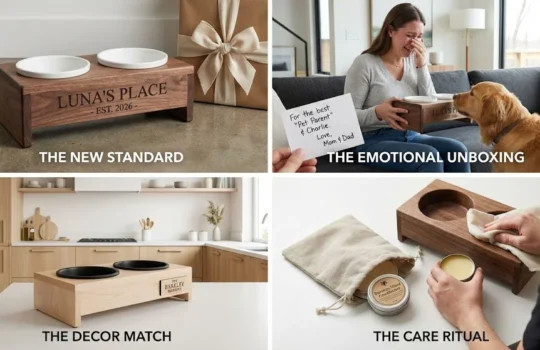
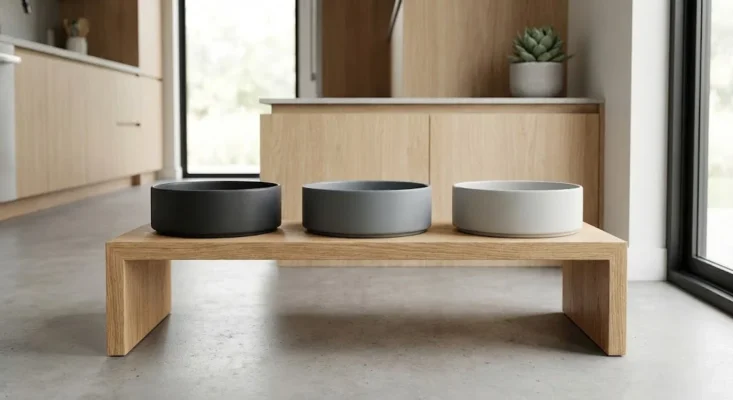
A designer trick for 2026 is using Tonal Graduation. If you have three dogs, choose ceramic bowls in three different shades of the same color family—for example, Charcoal, Slate, and Cloud Gray. This allows you to distinguish whose bowl is whose without breaking the visual harmony of your kitchen. Pair these with a Natural White Oak stand, and you have a pet station that looks more like a piece of sculpture than a utility item.
Beyond the Bowl
Designing a station for a “Pack” is the ultimate act of pet parenthood. It shows that you understand the unique personality, size, and health needs of every animal in your care. When feeding time becomes a moment of quiet, organized ritual rather than a frantic race, the peace radiates throughout the rest of your home.