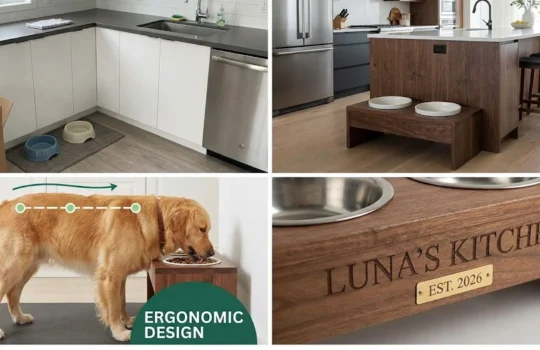
The year is 2026, and the American home has undergone a quiet but significant revolution. We have moved past the era of “disposable” pet products. The modern homeowner, particularly in design-forward cities like Austin, Seattle, and New York, no longer views their dog as just a pet, but as a primary member of the household. This cultural shift, known as “Pet Humanization,” has reached its peak, and nowhere is it more visible than in the kitchen.
For years, the “dog corner” was a place to be hidden, a messy area with clashing plastic bowls and water-stained mats that ruined the flow of a $50,000 kitchen renovation. Today, that has changed. Enter Furniture-Grade Pet Decor. The rise of the handcrafted, wooden dog bowl stand isn’t just about utility; it’s about architectural harmony.
The Death of the Plastic Bowl
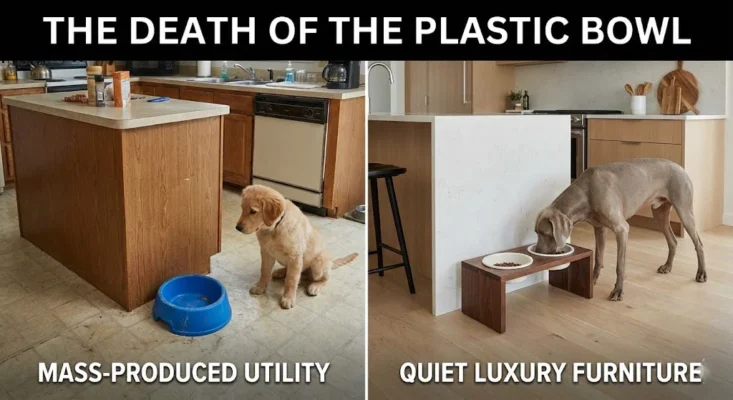
Why are American consumers decisively walking away from mass-produced pet accessories? The answer lies in the “Quiet Luxury” movement. In 2026, luxury isn’t about logos; it’s about materials, craftsmanship, and seamlessness.
A plastic bowl is a utility item. A Black Walnut dog stand is a piece of furniture. When you invest in high-end cabinetry and white oak flooring, a cheap feeder becomes a visual “anchor” that drags down the room’s aesthetic. Furniture-grade stands solve this by utilizing the same hardwoods used in premium dining tables, ensuring that your pet’s dining station feels like a natural extension of your home rather than an afterthought.
Categorizing the Aesthetic: Finding Your Match
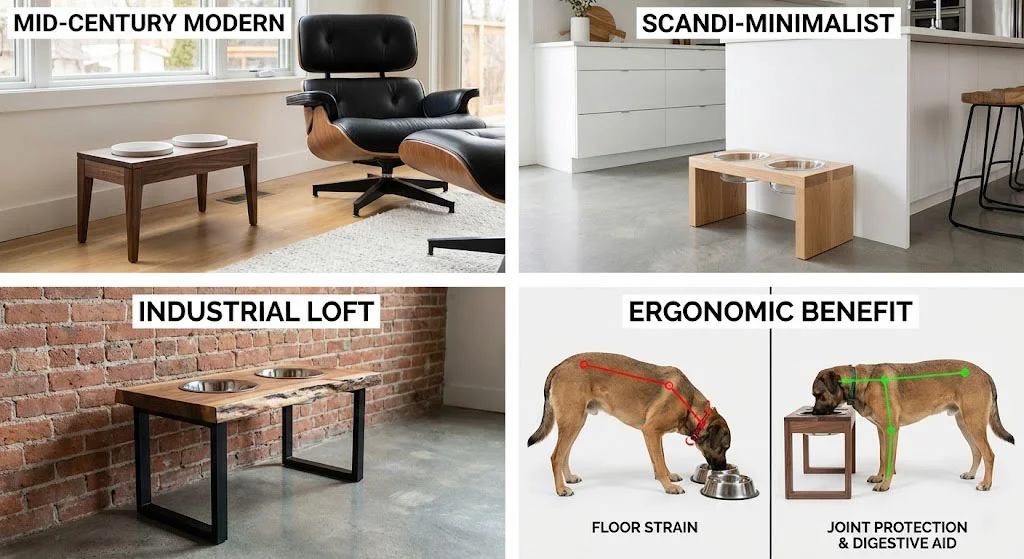
Matching your dog stand to your home aesthetic requires an understanding of your “interior vibe.” In 2026, four major design movements dominate the US market:
- Mid-Century Modern (MCM): The Timeless Classic: If your home features Eames-style chairs and tapered legs, an MCM dog stand is your go-to. Usually crafted from American Black Walnut, these stands feature sleek lines and angled legs that provide a sense of “airiness” to the floor space.
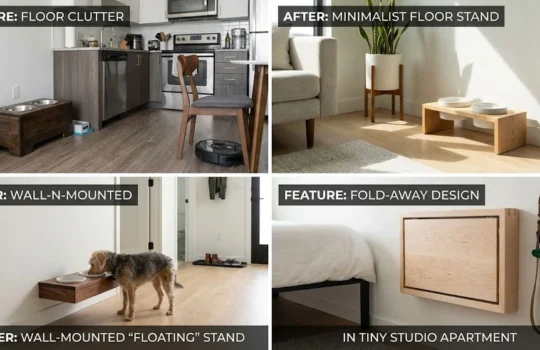
- Scandi-Minimalist: Light and Airy: For homes with a “Japandi” or Scandinavian influence, Hard Maple or White Oak is the standard. These stands are often blockier, focusing on the raw beauty of light wood grains and functional simplicity. They disappear into light-colored kitchens, maintaining a clean, Zen-like atmosphere.
- Industrial Urban Loft: Raw and Rugged: Popular in converted warehouses and modern townhomes, this style combines Live-Edge wood slabs with black powder-coated steel. It’s a “heavy-duty” look that matches stainless steel appliances and concrete countertops perfectly.
- Modern Farmhouse: Warm and Grounded: The 2026 iteration of the farmhouse style is more refined. It uses reclaimed Oak or Cherry wood with sturdy, pedestal-style bases. It’s designed to feel “lived-in” but incredibly high-quality.
| Style | Recommended Wood | Hardware Match |
| Mid-Century | Black Walnut | Brass or Gold accents |
| Minimalist | Hard Maple / White Oak | Matte White or Glass bowls |
| Industrial | Live-Edge Walnut / Oak | Black Steel or Iron |
| Farmhouse | Reclaimed Oak / Cherry | Hammered Copper or Stoneware |
Material Science: Why Hardwood is a Must
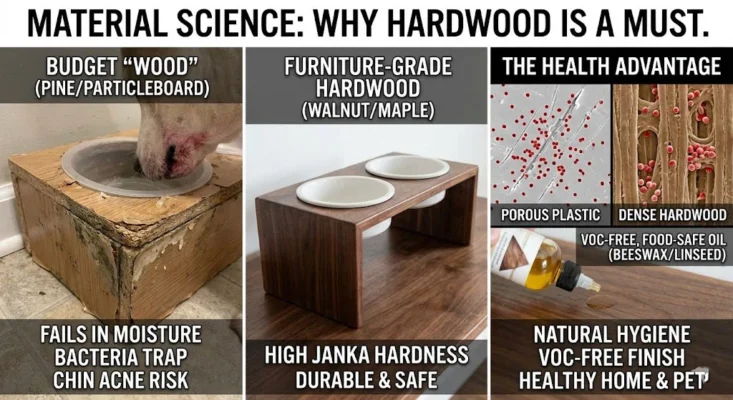
When we say “Furniture-Grade,” we are talking about durability and safety. Many budget “wooden” stands on Amazon are made of Pine or particleboard. In a high-moisture environment (where dogs are splashing water), these materials fail within months.
Janka Hardness: Premium hardwoods like Walnut and Maple have a high Janka rating, meaning they won’t easily dent or scratch when your dog gets excited for dinner.
Capillary Action & Hygiene: Hardwoods possess a natural ability to trap and neutralize bacteria as the wood dries. This helps prevent “Chin Acne” in dogs—a common skin irritation caused by the bacteria buildup found in porous plastic bowls.
The VOC-Free Standard: In 2026, health is wealth. High-end stands are finished with food-safe, VOC-free oils (like linseed or beeswax blends). This ensures that no toxic chemicals are off-gassing into your pet’s food or your home’s air.
The Ergonomic Benefit Hidden in Beauty
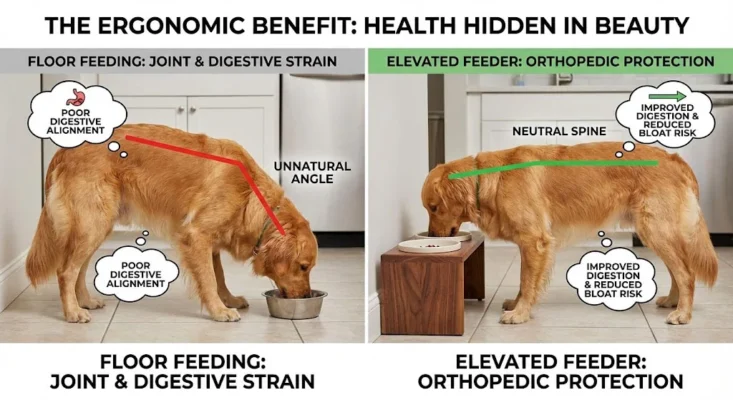
While the primary driver for these stands might be aesthetics, the hidden “hero” is the Health Benefit. An elevated feeder is orthopedic by design.
Joint Protection: By raising the bowls, you reduce the strain on your dog’s neck, shoulders, and front joints. This is crucial for aging dogs or large breeds prone to arthritis.
Digestive Alignment: Eating from an elevated position allows food to travel more easily from the mouth to the stomach. For many breeds, this reduces the risk of Gastric Torsion (Bloat)—a life-threatening condition caused by inhaling too much air while eating.
Designing the “Pet Station” Ritual
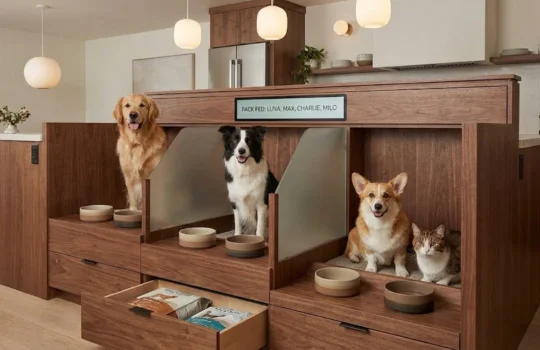
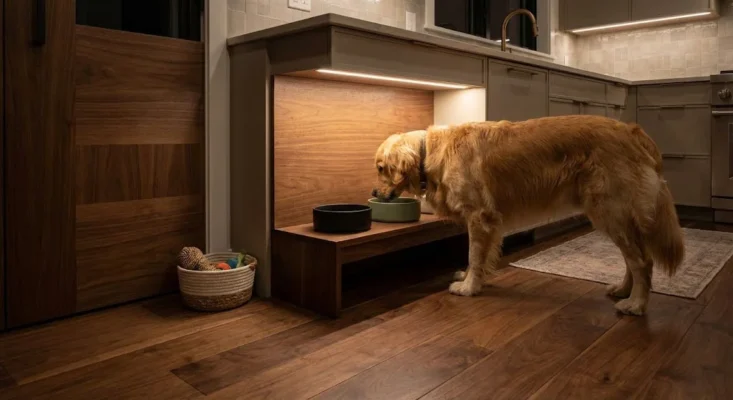
To truly elevate your hosting game, the dog stand should be part of a larger “Pet Station” ritual. In 2026, we see homeowners integrating these stands into built-in kitchen “nooks.”
The Floor Match: A common designer trick is to choose a wood species that is exactly two shades darker or lighter than your hardwood floors. This creates enough contrast to be visible but stays within the same “color family.”
Artisan Bowl Coordination: Move away from generic silver bowls. Pair your walnut stand with hand-thrown ceramic bowls in matte black or sage green. The texture of the clay against the smoothness of the wood is a sensory delight.
The “Night Lite” Integration: Some high-end custom stands now feature recessed, motion-activated LED strips. When your dog goes for a midnight drink, a soft glow illuminates the area, preventing you from tripping in the dark while looking like a high-end architectural detail.
Harmony at Every Level
Investing in a furniture-grade dog bowl stand is a declaration that every detail of your life—and your dog’s life—matters. It represents a shift from “owning” a pet to “living with” a companion. By matching your pet’s gear to your home’s soul, you create a space that feels unified, calm, and intentional. In 2026, the best-designed homes aren’t just for humans; they are for the whole pack.